Learn Cardiology.
Understand the Heart.
Evidence-based courses, clinical cases, and interactive challenges built for medical students, residents, and young doctors mastering cardiology.


Dr. Avazbek Ravshanov, MD
Dr. Ravshanov is an emergency medicine physician at the Samarkand Regional Branch of the Republican Emergency Medical Center, and a 2025 graduate of Samarkand State Medical University. He created this platform to make evidence-based cardiology education accessible to medical students and young clinicians.
Master Cardiology Step by Step
Master systematic ECG interpretation from rhythm to axis.
Guideline-based approach to diagnosing and managing hypertension.
Learning Challenges
Shortness of breath, fatigue. What is the most likely diagnosis?
Solve the case →Sinus rhythm, AFib, STEMI, or VT? Test your ECG reading skills.
Take the challenge →10 questions · Beginner · ~5 minutes. Track your score.
Start quiz →Interesting Facts
The heart beats approximately 100,000 times per day, pumping about 7,500 liters of blood.
A standard ECG uses 12 leads to capture electrical activity from different angles of the heart.
Werner Forssmann performed the first human cardiac catheterization on himself in 1929.
The Six Surfaces of the Heart
Formed mainly by the right ventricle, with contributions from the left ventricle and right atrium. Faces the sternum and ribs.
Formed mainly by the right and left ventricles, separated by the posterior interventricular sulcus.
Formed mainly by the left atrium, into which the four pulmonary veins drain — opposite the cardiac apex.
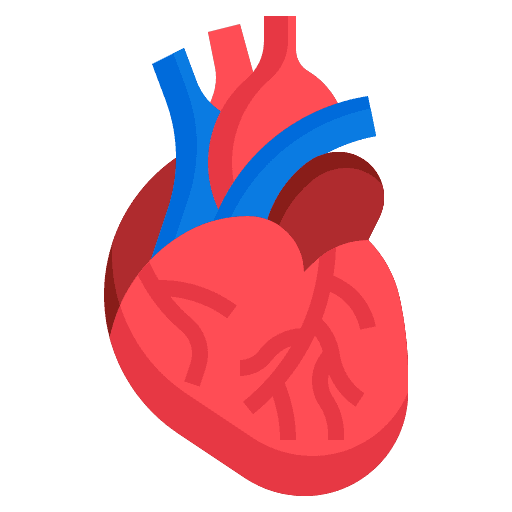
Formed mainly by the right atrium, facing the right lung.